
Online Exam Security with Real-Time Tracking (RTT)
Online Exam Security with Real-Time Tracking (RTT)As education and exam processes continue to digiti...
The days of piling up stacks of résumés on a desk are long gone.
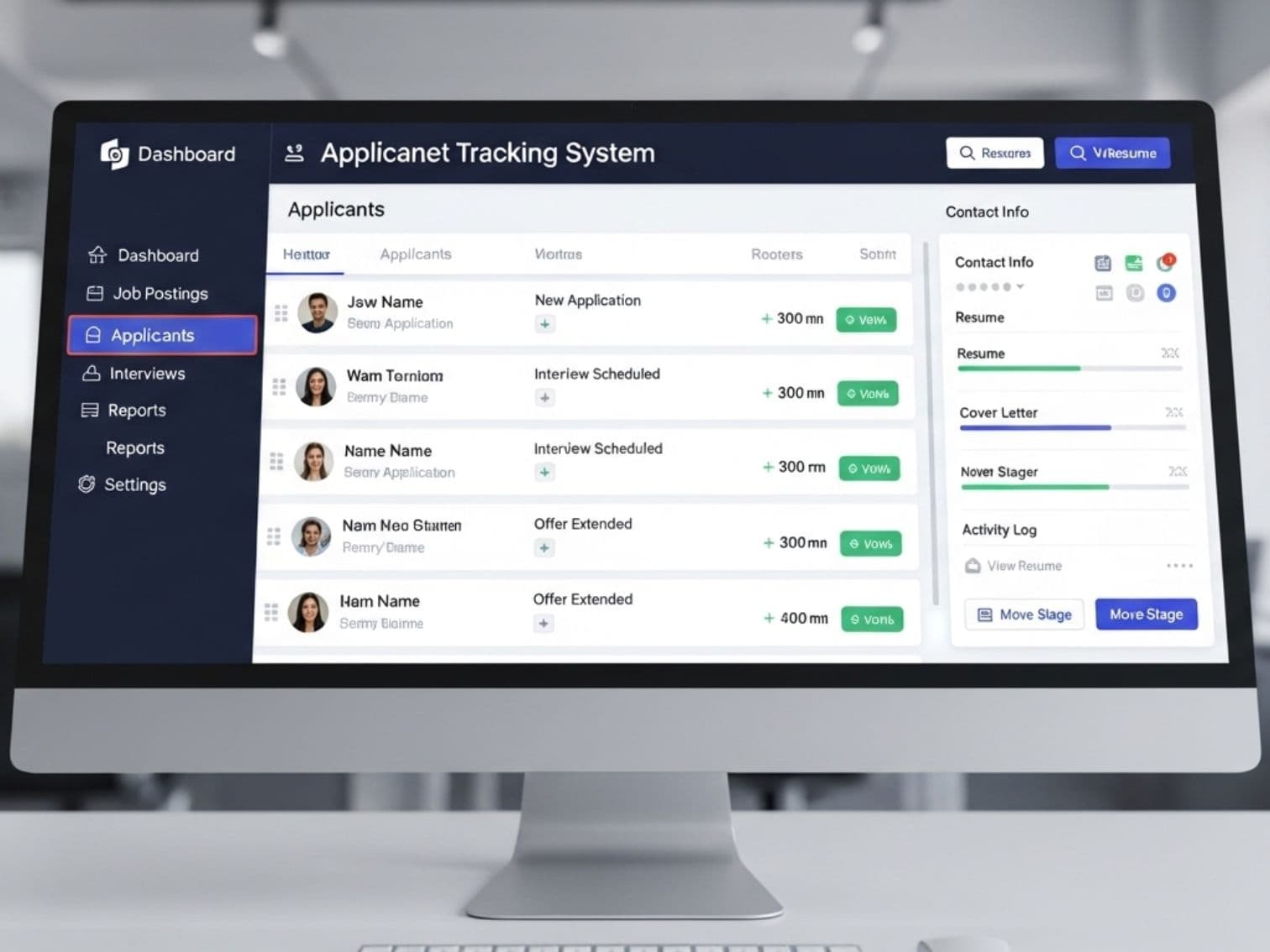
Today, recruitment has become a strategic operation centered on data science, automation algorithms, and behavioral analytics. The brain behind this transformation is the Applicant Tracking System (ATS). An ATS is not just a digital file repository; it is a central command center that manages every step, from employer branding to interview scheduling. Why is it so important? Because 97.8% of Fortune 500 companies use this technology.
The era of physical résumés, newspaper ads, and applications arriving by mail. Although the first screening steps were taken in the 1980s with OCR (Optical Character Recognition), high costs meant it was available only to large conglomerates.
The birth of Monster and LinkedIn! The surge in application numbers pushed systems toward keyword-based filtering (keyword matching) . Recruitment became faster, but outstanding candidates started getting screened out because of keyword games.
After cloud systems, we are now in the age of artificial intelligence. Modern ATSs focus not on words but on context and skills . Autonomous systems that reduce bias are rewriting the rules of the global war for talent.
A PDF or Word file uploaded to the system is instantly broken down. Data such as names, experience, and skills is extracted within seconds and placed in the right fields in the digital database. Machine readability is crucial here.
Contrary to the urban myth, the system does not automatically reject candidates. However, when a recruiter filters the results, if you do not have the required keywords, you become “invisible” in the search results. You never reach human eyes.
Next-generation ATSs do not look for exact word matches. Thanks to NLP (Natural Language Processing), they understand that a “Software Engineer” and a “Backend Developer” essentially have the same skills and match candidates accordingly.
By switching to an Applicant Tracking System, you can save time and strengthen the backbone of your company, from legal compliance to organizational efficiency. According to Deloitte’s research, companies with a solid technology infrastructure are 1.5 times more successful.
Automating manual processes brings wait times close to zero. Communication templates let you respond to candidates in seconds.
The cost per hire can be brought down to the $150–300 range. For high-volume hiring, this directly impacts company profitability.
Resume anonymization features hide candidates’ gender, age, or educational institution. Only their skills come to the fore. This impartiality and standardization in the process, just as in the secure exam system infrastructure used in educational technology, helps build an assessment environment free from external interference and based solely on merit and facts.
Over-optimizing systems comes at a painful cost. A major research report published by Harvard Business School (HBS)demonstrates how ATS configurations leave qualified candidates unemployed. Those who do not fit the templates, have taken a career break, or have skills instead of a degree become completely invisible.
According to HBS data, companies that recalibrate their technological filters to be “inclusive” rather than “exclusionary” are 44% less likelyto struggle to find workers with the required skills, while employee engagement is 60% higher. We must use the system not for “cost minimization” but for “maximizing human potential.”
Getting past this digital black box is not a matter of luck; it is entirely a matter of strategy and data.
Don’t get creative. If a company is looking for a “Senior Product Manager,” don’t call yourself a “Product Strategy Lead.” Candidates who put the exact title from the job ad in their headline see their chances of getting an interview increase 10.6-fold.
Naturally weave the terms used in the job ad into your résumé. If there are acronyms (for example, ERP), write both the full term and the abbreviation to ensure you show up in both of the algorithm’s searches.
Machine systems prefer simplicity over aesthetics. Two-column designs, logos, and tables can cause data to get jumbled. Never put your contact information in the “Header”; bots often skip over that section without reading it.
In the 2025–2026 period, ATSs are no longer just systems that “store” information; they have become active assistants that can generate text and make decisions. Platforms like Greenhouse transcribe interviews live and summarize “the candidate’s strengths and weaknesses” for managers in 5 seconds.
Candidates, meanwhile, written with ChatGPT are trying to hack the system with robotic résumés. 88% of HR professionals can recognize a soulless text written by AI within seconds. The winners will not be those who use AI, but those who use it intelligently to present their own stories and success metrics in context .
Technology should not be a wall for rejecting candidates, but a bridge to getting to know them better.
No. This widely circulated claim in the industry is a myth. An ATS does not actively say “no” to you. However, if you do not have the keywords the recruiter is searching for when filtering results in the system’s search bar, your résumé will not appear in the search results. In other words, you are not rejected; you simply become “invisible.”
ATSs prioritize structural simplicity (plain text) over design. Avoid using two or multiple columns, complex background graphics, and logos. Use a chronological (most recent to oldest) format. Never put your contact information in the header, and match your job title exactly to the one in the job ad.
ATS platforms do not have a mechanism for penalizing candidates simply because their résumé was “written by AI.” The system focuses on parsing the data. The real issue, however, is that AI-generated text is usually overly generic and robotic, and lacks the candidate’s personal achievement metrics. So even if you get past the machine, you may be screened out during human review because your résumé creates the impression of being “poor and carelessly prepared.”
Discuss the proctoring, identity verification, environment analysis, and reporting workflow suited to your organization with the QProctor team.