
Online Exam Security with Real-Time Tracking (RTT)
Online Exam Security with Real-Time Tracking (RTT)As education and exam processes continue to digiti...
Today, almost every technology provider in the online exam security sector makes similar claims: "We recognize faces, lock down tabs, and catch cheating." But the real stumbling block for companies, HR directors, and university legal counsel is this: "Exactly how should we treat a candidate or an existing employee who cheats?"
Can an employee be dismissed simply for looking at a secondary screen during an exam? Is it lawful for AI to reject a candidate because their internet connection dropped or their eye twitched? Because most organizations do not know the answers to these questions, they either ignore cheating or face lawsuits after imposing disproportionate penalties. To fill this exact gap, the QProctor Ethical Management Frameworkoffers a standard that not only detects cheating, but manages it fairly and in graduated stages.
Ethical management after cheating is detected is a fair disciplinary protocol that bases suspicion of an exam-time violation on objective evidence and graduated defense procedures, rather than imposing an immediate, predetermined penalty.
The three major risks that traditional, rigid exam systems pose to organizations are:
Employees whose employment is terminated solely on the basis of an AI score can easily win reinstatement lawsuits because no concrete evidence can be presented.
Declaring an innocent candidate a "cheater" because of changing light or an eye condition causes irreparable damage to the corporate employer brand.
Imposing the same penalty for a minor tab warning and organized proxy-candidate fraud is entirely contrary to the constitutional principles of proportionality and due process.
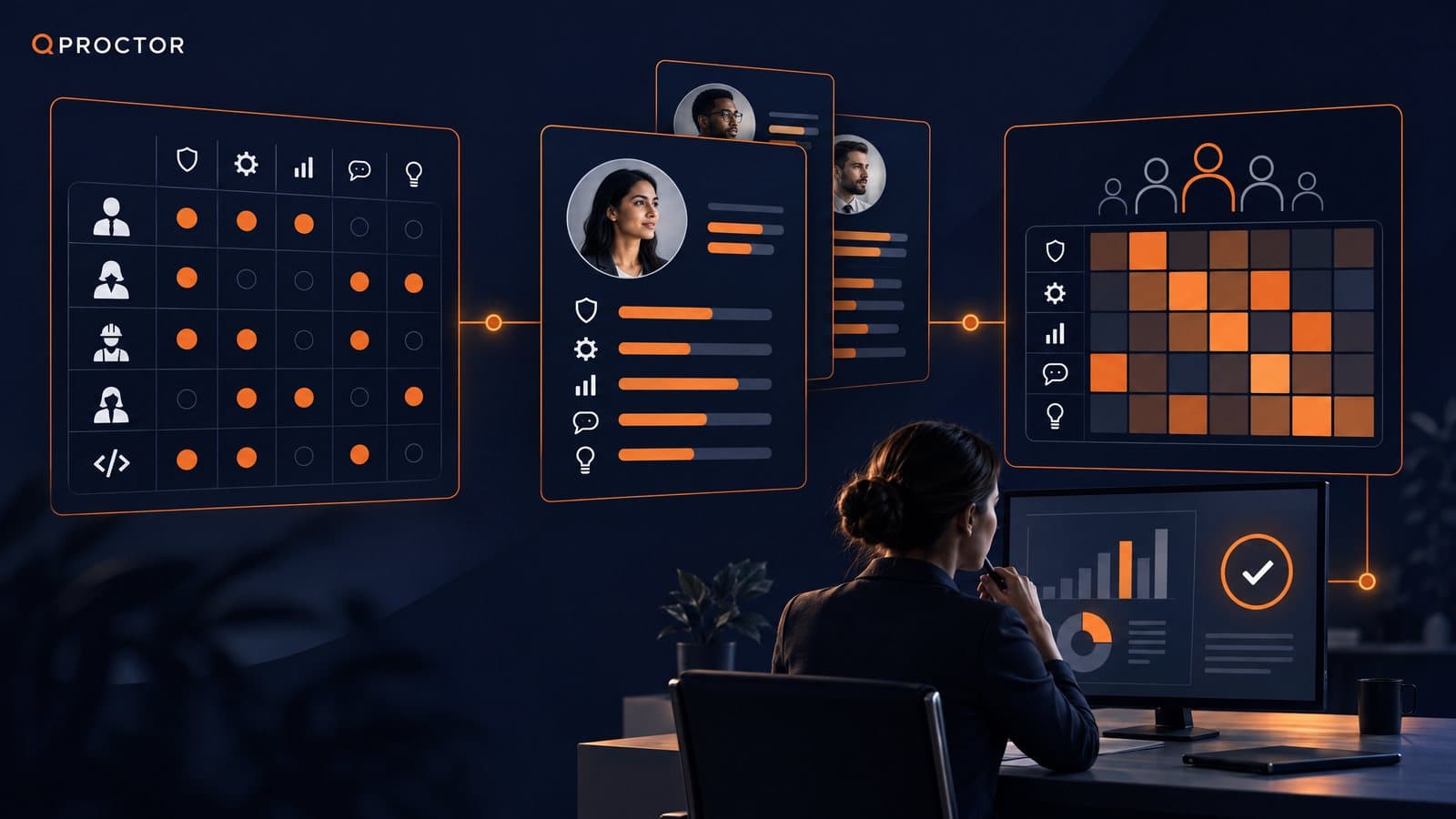
Tools on the market shut down the system by displaying a direct "Your Exam Has Been Canceled" warning to the candidate. This humiliates the candidate and deprives them of the right to defend themselves. Instead of stopping the exam, QProctor quietly records the anomaly with a timestamp and provides the human proctor with a graduated decision protocol.
QProctor provides organizations' HR and Legal departments with a ready-to-use disciplinary and management protocol:
As soon as an AI anomaly is detected, the candidate's session is terminated. There is no appeal mechanism, and no video evidence is generated. The HR manager ends up in conflict with the candidate.
The candidate is warned first; if suspicion persists, they are given the right to take a neutral second-chance exam. In the event of a confirmed violation, a second-by-second video evidence report that can be submitted to a court is prepared.
Select the steps your organization follows when cheating is suspected in your exam processes to calculate the risk of legal challenges you may face.
Your company faces a serious risk of litigation due to unfair dismissal or disproportionate penalties.
Key points to protect your organization's reputation and legal rights while preserving integrity in exams:
Check whether your system meets ethical standards:
Lead your organization not to the courtroom, but toward a fair and transparent assessment culture. Secure exam integrity both legally and ethically with QProctor's ready-to-use Ethical Management Framework.
Instead of ending the exam at the first violation and losing the candidate, on-screen automatic warnings help the candidate return to the exam rules.
Candidates who maintain their innocence are automatically given the right to an alternative session of equal difficulty through the system.
Combines facial, screen, and audio anomalies with second-by-second video timestamps for use in legal proceedings.
Protects brand reputation by preventing candidates from posting on social media that they were "unfairly rejected."
Let's build a graduated exam security model that gives your HR and Legal departments peace of mind.
Request a Free Demo and InformationReview the proctoring, identity verification, environment analysis, and reporting workflows suited to your organization with the QProctor team.