
Online Exam Security with Real-Time Tracking (RTT)
Online Exam Security with Real-Time Tracking (RTT)As education and exam processes continue to digiti...
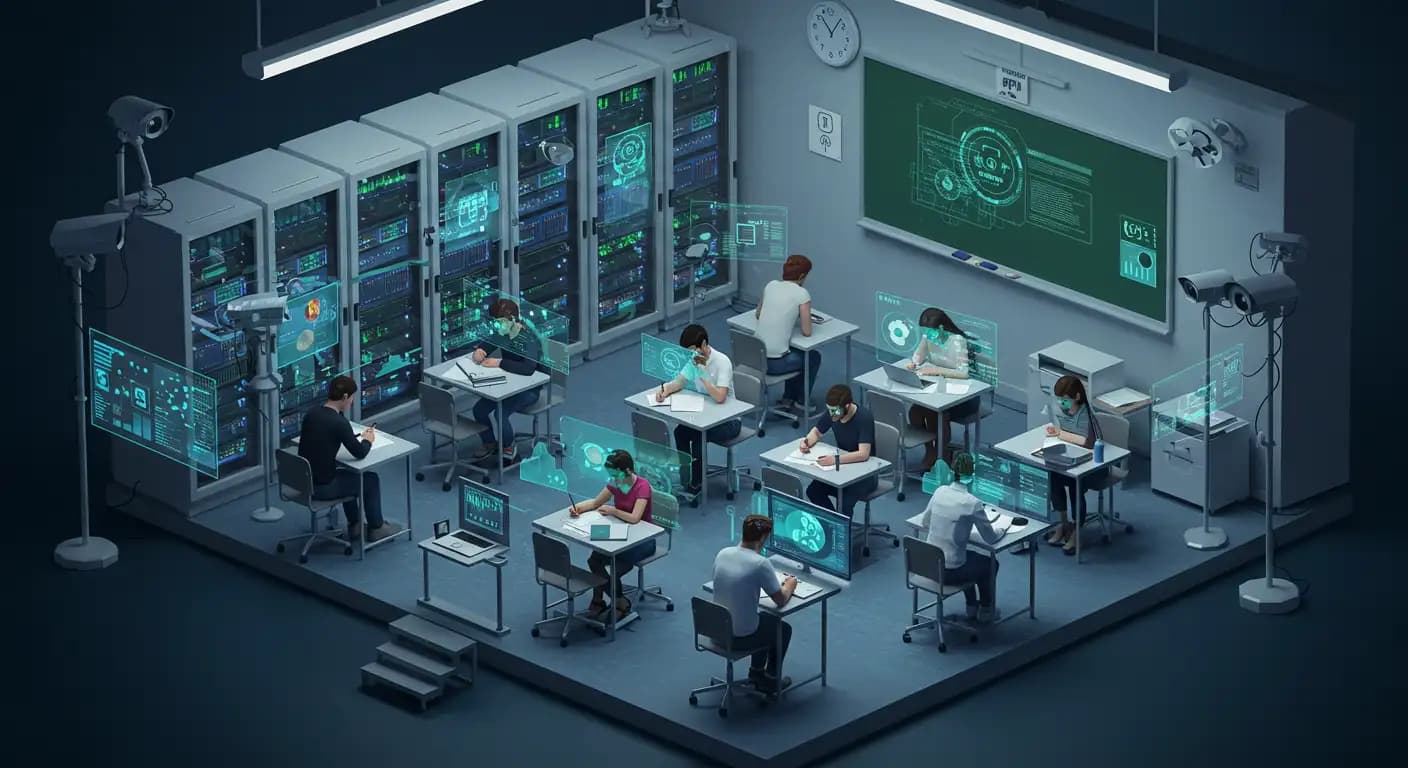
As remote learning became a lasting fixture, higher education institutions and professional certification organizations underwent an unprecedented technological transformation to protect academic integrity. Online proctoring (online proctoring) systems integrate artificial intelligence and human proctors to ensure exam security.
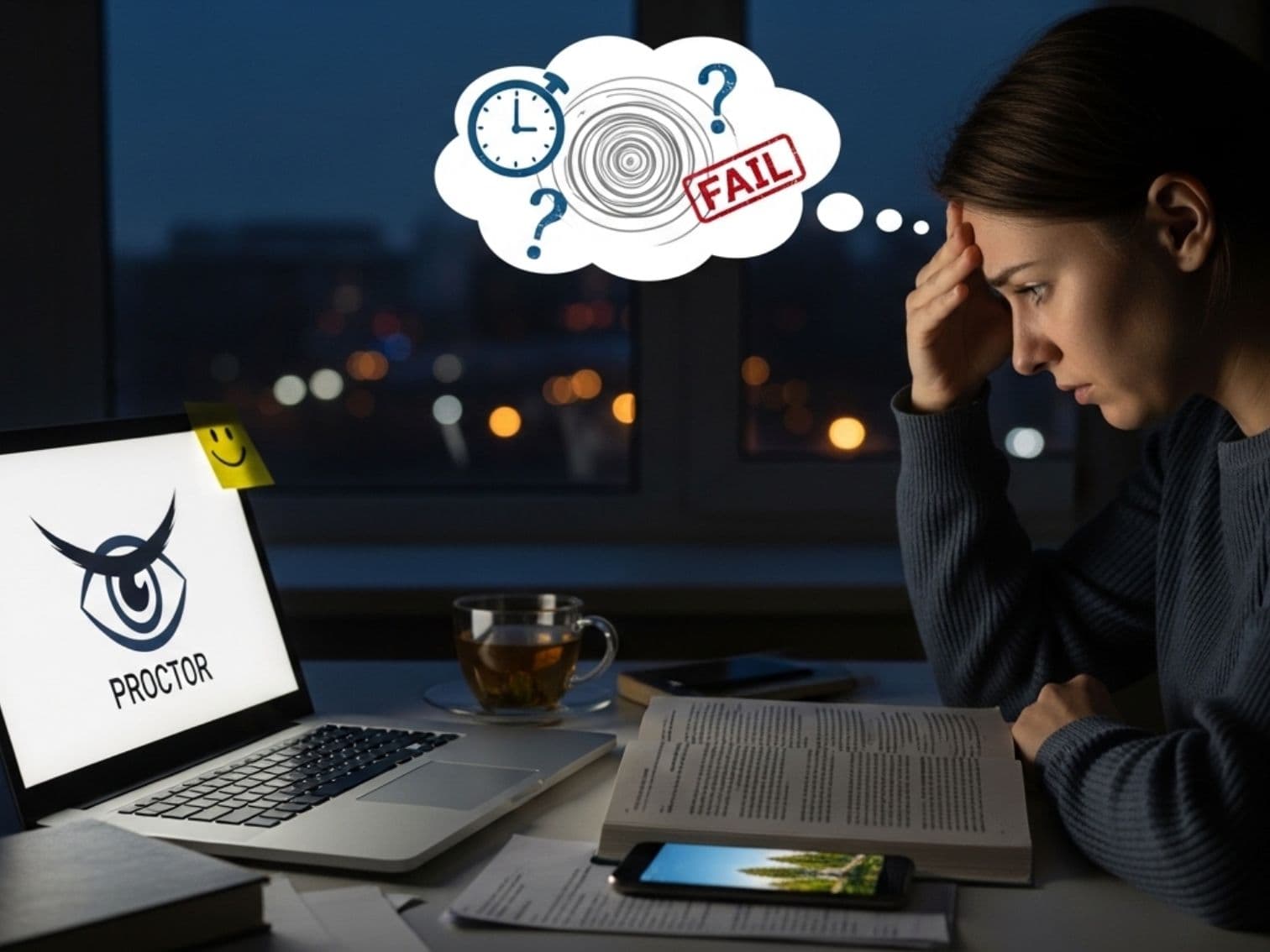
The technological integration of proctored exams has given rise to a new psychological phenomenon that goes beyond the traditional "test anxiety" described in the literature. Rather than fear of failure, the existential and perceptual stress caused by being watched by a machine or an unfamiliar person takes center stage.
Students describe these systems as "intimidating" and "intrusive"; they believe that a small physical movement could be misinterpreted by AI and put their academic careers at risk. For a broader perspective, you can also consult our resources on the online proctored exam guide .
The Hawthorne Effect, which describes how people change their behavior when they know they are being watched, causes students to suppress their natural test-taking behavior. Social Facilitation theory shows that, in high-stakes tasks requiring analytical thinking, the feeling of being watched reduces performance rather than improving it.
Systems are not neutral. Individuals with structurally high trait anxiety tend to score statistically lower in proctored settings. This person-situation interaction disproportionately disadvantages students who are already vulnerable.
Cognitive Load Theory suggests that software adds a huge amount of extraneous cognitive load to the student's mind. Instead of processing the questions (intrinsic load), the student is constantly monitoring their camera and movements.
The most effective way to manage anxiety disorders is to demystify and rationalize the feared object. Understanding the logic behind the systems restores a sense of control.
The software expects your face to be in the frame and your eyes to be on the screen. Looking away from the screen immediately generates a flag.
The microphone listens for background sounds (whispering, page turning). These are recorded as suspected external assistance.
A locked browser disables clipboard functions, alerts you to a second monitor, and blocks keyboard shortcuts.
Even a momentary departure of the face/eyes from the frame is detected as "Partially Missing" . This is a major source of anxiety and is used in closed-book exams.
This is the default setting. Brief head turns are tolerated, while extended periods out of frame are reported. It provides balanced monitoring.
If the AI can tell that the person is present, it does not trigger the system. It reduces the student's extraneous cognitive load and is used for open-book exams.
Institutions such as Rutgers University require a human-in-the-loop system before reporting. Even if a pet entering the room or a siren outside triggers the machine, the human proctor monitoring the situation will immediately recognize that it is innocent.
The most valuable practice is taking a "Practice Quiz."
Cognitive Behavioral Therapy (CBT) strategies have demonstrated evidence-based results in managing online exam anxiety. Irrational cognitive distortions such as "catastrophizing" and "overgeneralization" should be replaced with structured reasoning.
"The camera is watching my every move. If I fidget a little, the AI will accuse me of cheating, my exam will be canceled, and I'll be expelled!"
Reframe"The AI only flags unusual movements. Human proctors monitor dozens of screens at the same time. If there is an issue, the instructor reviewing the recording will see that I was just stretching. An exam is not the end of the world."
It involves confronting the feared stimulus in a safe environment. By arranging the exam room in advance, activating the software, and taking timed practice tests, students help their brains encode the environment as harmless (desensitization).
Quickly reviewing the test as soon as it begins (skimming) removes the element of surprise. If permitted, writing formulas on digital or physical scratch paper (brain dump) eases the load by externalizing information from working memory.
One minute of mindful breathing stimulates the vagus nerve, biologically lowering the heart rate immediately.
Consciously tensing and releasing all the muscles from the feet upward (Progressive Muscle Relaxation) releases kinetic stress in the body.
Staying up all night before an exam sends stress levels soaring. An uninterrupted 8 hours of sleep is essential for information to move into long-term memory.
White/daylight (1500 lux), which supports the circadian rhythm, significantly increases stress resilience through HRV.
Institutions should; Single Sign-On (SSO) systems to ensure password confidentiality, and secure the transfer of biometric data to servers with end-to-end encryption . Role-based access control should ensure that only authorized instructors can access videos.
A fundamental condition of academic fairness is that students must not be penalized solely on the basis of AI scores. In suspicious cases, the student should be engaged in transparent consultation or offered alternative in-person proctored exam options on campus.
Ultimately, no matter how sophisticated proctoring algorithms become, an individual's mental resilience and knowledge remain at the center of assessment. The moment students internalize that the webcam on the desk is not an authority that will judge their careers, but merely an ordinary verification tool , they will be free to demonstrate their true performance, released from the psychological shadows cast by the screen.
Review the proctoring, identity verification, environment analysis, and reporting workflows suited to your institution with the QProctor team.